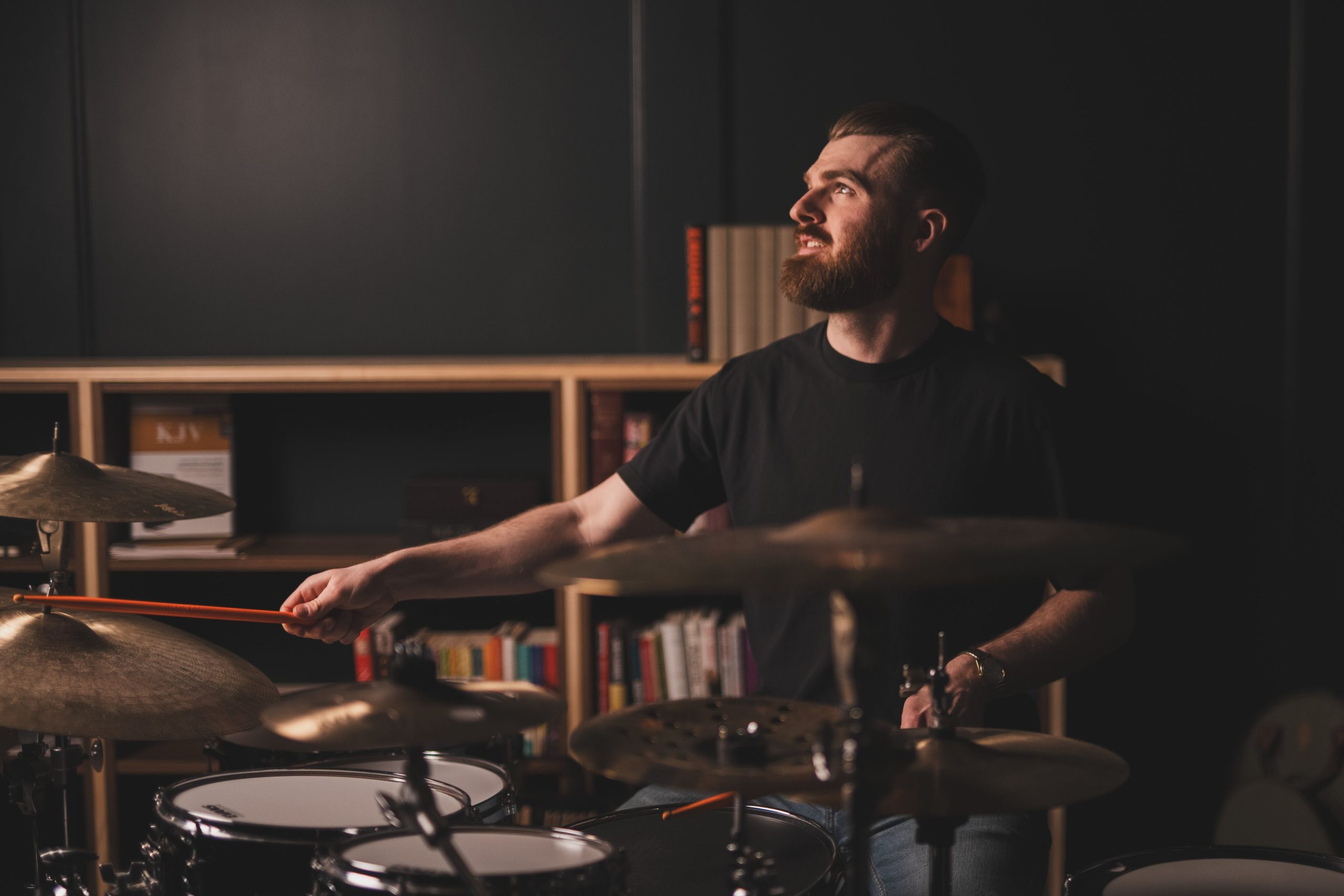
I grew up surrounded by music.
My dad is a professional saxophone and flute player and spent his career as a music educator. Our house was always filled with music, especially jazz, gospel, R&B, and whatever else he happened to be listening to.
On the drive to school, he'd put on Jazz FM 91.1 and quiz my brother and me.
"What kind of saxophone is that?"
"What decade do you think this was recorded?"
"What's the time signature?"
At the time, I didn't realize what he was doing.
I was learning to listen.
That musical upbringing became one of the foundations of the musician and teacher I eventually became.
I FOUND THE DRUMS ALMOST BY ACCIDENT.
Drums weren't my first instrument.
I spent a couple of years taking piano lessons and even won first place at a Kiwanis competition. I tried saxophone. I got a guitar.
Nothing really stuck.
Then, when I was around 13 or 14, a friend noticed an old drum kit sitting in our basement that my dad had bought from a former student.
A few days later he called me.
"Set up those drums. We're gonna jam."
So I did.
I don't remember playing anything impressive. I’m sure I didn't.
What I do remember is that I loved it.
This time, the instrument stuck.
LEARNING FROM THE RIGHT PEOPLE.
At first, I learned the way a lot of young drummers do.
I played.
A lot.
I copied things I heard, played along to music, watched other drummers, experimented, and spent hours trying to figure things out.
Thankfully, my dad knew enthusiasm would only take me so far.
Once it became obvious that drums weren't another passing interest, he connected me with several professional drummers and teachers.
Each one gave me something different.
One helped develop my technique, control, and independence. Another pushed my limb independence much further. Another introduced me to ghost notes, which completely changed the way I understood groove at the time.
I also studied percussion and reading, and I've continued learning through established methods, books, teachers, other musicians, and years of experience behind the kit.
Those teachers showed me something I still believe today:
Good teaching gives you the right thing to work on at the right time.
That idea has stayed with me.
LEARNING ON THE BANDSTAND.
Some of my most important musical education happened outside the practice room.
As a teenager, I was already playing in bands, church worship teams, and jazz gigs with my dad.
I remember sitting behind the kit at gigs when he'd turn around and call:
"Swing!"
Or:
"Bossa Nova!"
Then he'd count us in.
And off we went.
There wasn't much time to overthink it.
I had to listen, keep time, respond to the musicians around me, recover from mistakes, and figure out how my playing fit into the music happening around me.
Those experiences taught me something I've never forgotten:
Knowing how to play the drums and knowing how to play music with other people are different skills.
A good drummer needs both.
And I'm still learning those lessons today.
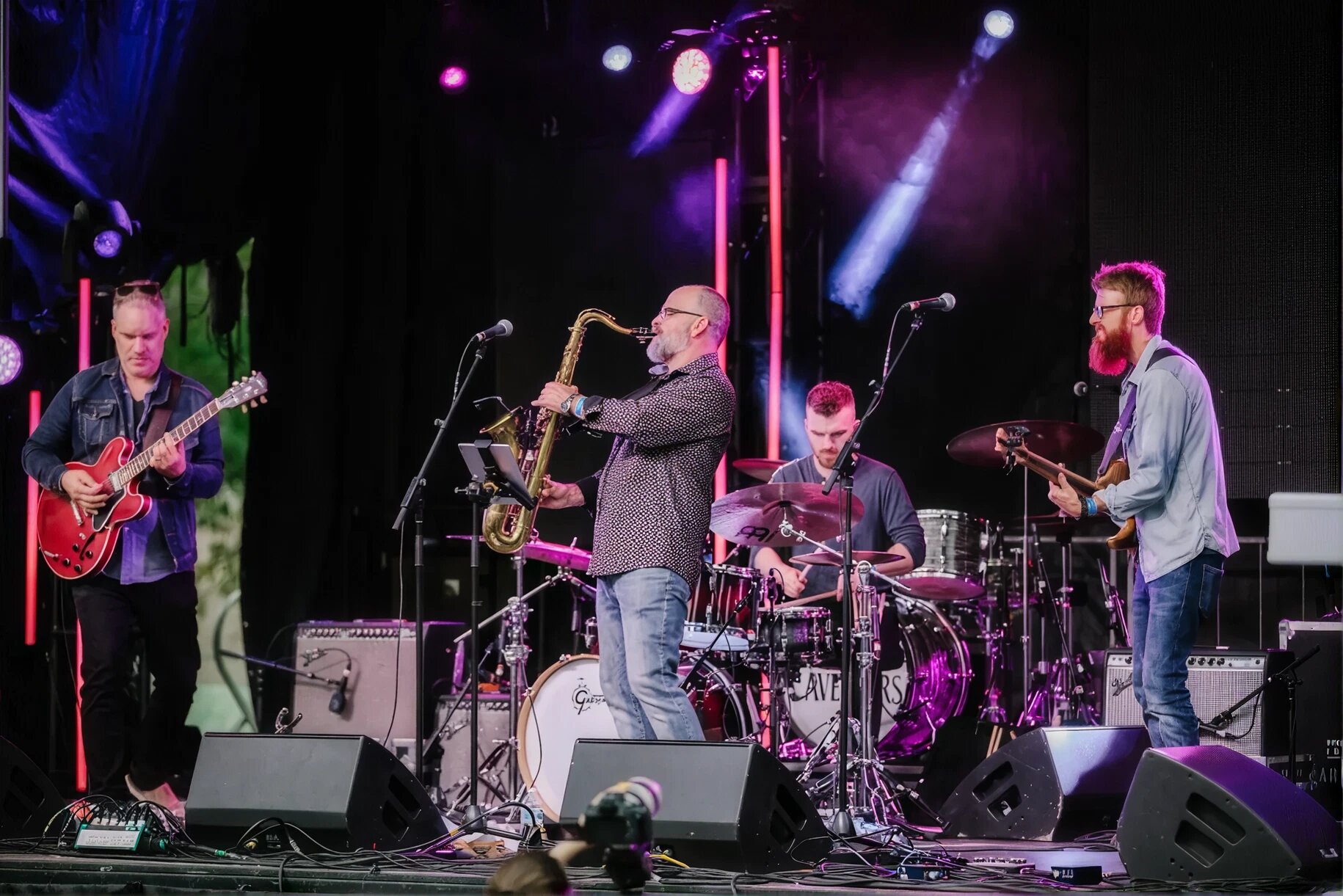
More than 20 years after I started, performing remains an active part of my life. My primary band is Generation Train, and I regularly substitute for several other bands and bandleaders.
These days, that works out to approximately 40 or more live gigs each year.
I'm still loading gear, learning songs, working with different musicians, adapting to different rooms, walking onto stages, making mistakes, and doing the job.
Every gig reinforces the fundamentals I want my students to develop:
Keep good time. Listen. Know the music. Come prepared. Control your volume. Serve the song. Recover from mistakes. Be someone other musicians want to play with again.
YEARS BEHIND THE KIT AT CHURCH.
Church has also played a significant role in my life as a drummer.
For years, I played regularly at churches throughout Niagara and the GTA, from smaller worship teams to some of the largest churches in my area.
That meant learning to work with different worship leaders, musicians, arrangements, click tracks, backing tracks, and musical environments.
It taught me a lot about restraint.
Sometimes the best thing a drummer can do is play less.
Listen carefully. Control the room. Support the band. Understand the purpose of the music. Know when to push and when to stay out of the way.
Serve the song.
Those years are also why I particularly enjoy teaching church drummers today.
I understand what it's like to sit behind the kit on Sunday morning with a click in your ears, a band around you, an arrangement to remember, and a responsibility to contribute musically without making the moment about yourself.
That's a skill worth developing.
THE TEACHER I'VE BECOME.
There wasn't one moment when I suddenly became a better drummer.
There were hundreds of smaller ones.
The first time a rudiment started to flow naturally.
Finally understanding a coordination problem.
Discovering ghost notes.
Learning to read.
Getting comfortable with a click.
Playing a style that once felt foreign.
Really locking in with another musician.
Walking into a gig and realizing I was prepared.
Progress accumulated.
That's one reason my teaching has become increasingly structured.
Most students work through a curriculum that develops the fundamentals of drumming in a logical progression, while I adapt the lessons to the student sitting in front of me.
I want students to know:
The curriculum gives us direction.
We can still stop and learn the song you've been listening to all week. We can spend extra time fixing a weakness. We can follow a musical question because you're genuinely curious about it.
But we always have somewhere to go.
I BELIEVE IN HIGH STANDARDS.
I also believe learning drums should be fun.
Sometimes, though, the fun comes after the work.
Getting good at something requires practice. It requires repetition. It requires accepting correction. Sometimes it means slowing something down and playing it again when you'd much rather move on.
Then one day, you sit behind the kit and something that once felt impossible suddenly feels natural.
There is a particular kind of satisfaction in that.
You earned it.
I expect my students to work because I want to see what they're capable of becoming.
Those expectations apply to me too.
If I ask a student to prepare, I should prepare.
If I ask a student to keep learning, I should keep learning.
And if a student or family trusts me with their time, money, and musical development, I owe them serious instruction, preparation, encouragement, correction, and attention.
That's the standard I want to teach by.
FAITH, FAMILY & THE STUDY.
I'm a Christian, husband, and father of five.
My religious convictions shape the way I try to live, raise my family, treat people, teach my students, and operate my business.
That's why SteveDrumLessons and The Study are intentionally family-friendly and Christ-centred.
Students don't need to share my beliefs to study here. I teach students from different backgrounds, and every student should be treated with dignity and respect.
I simply want people to know who they're learning from and the values of the home and studio they're entering.
Being a father also affects the way I think about teaching children.
When a parent leaves their son or daughter with me for a private lesson, they're placing a significant amount of trust in me.
I take that responsibility seriously.
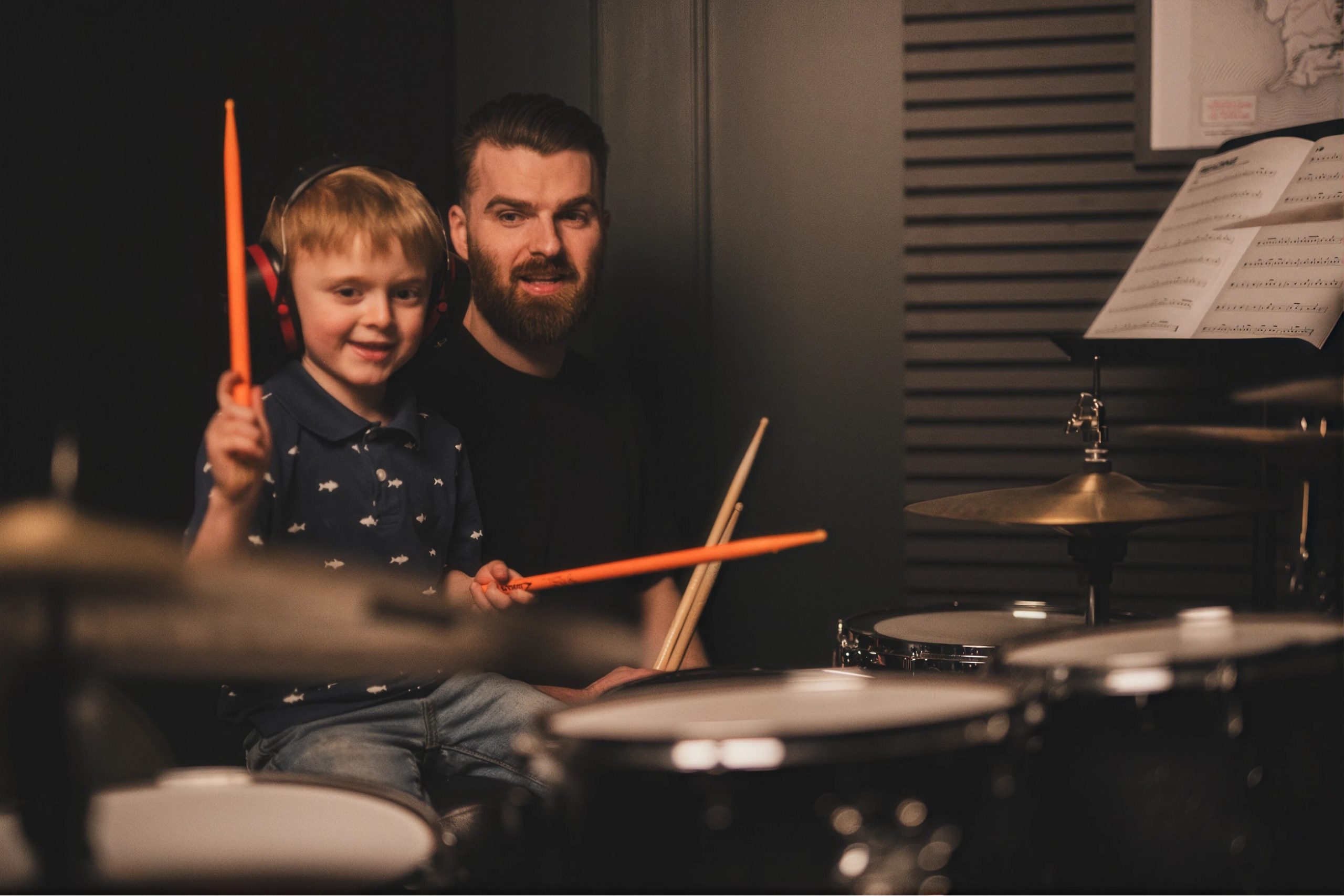
That's also why parents and guardians are always welcome and encouraged to sit in on their child's lessons whenever possible.
STILL A STUDENT.
One of the things I hope students pick up from The Study has very little to do with drums.
Keep learning.
The studio contains a growing personal library covering music, history, theology, finance, biography, fiction, and more.
That's intentional.
I don't think learning should stop because you've finished school, reached a certain age, become good at your job, or accumulated some experience.
There is always something you don't know.
There is always someone you can learn from.
There is always another skill worth developing.
After more than 20 years behind the kit, I still consider myself a student of the instrument and of music.
WHY I TEACH.
I've been fortunate to have a lot of people invest in me over the years.
The teachers who took the time to correct me mattered.
The musicians who let a young drummer onto the bandstand mattered.
My dad putting Jazz FM on during the drive to school mattered.
The gigs that went well mattered.
The ones where I made mistakes probably taught me even more.
Now I get the opportunity to pass some of that on.
I want to help develop drummers who can keep time, listen, play with other musicians, understand their instrument, practice intelligently, accept correction, and continue learning for themselves.
Some of my students may eventually play professionally.
Some will play at church.
Some will join bands.
Some will play at home simply because they love the drums.
All of those are worthwhile.
Excellence will look different for different students. The goal is to keep growing.
And hopefully, to make some great music along the way.
I hope I always will.